
Most people I interact with don’t proactively help others greet them by name. And yet, we all know that hearing our own name spoken is the sweetest sound. Right?
Here are several proactive techniques, when in doubt.
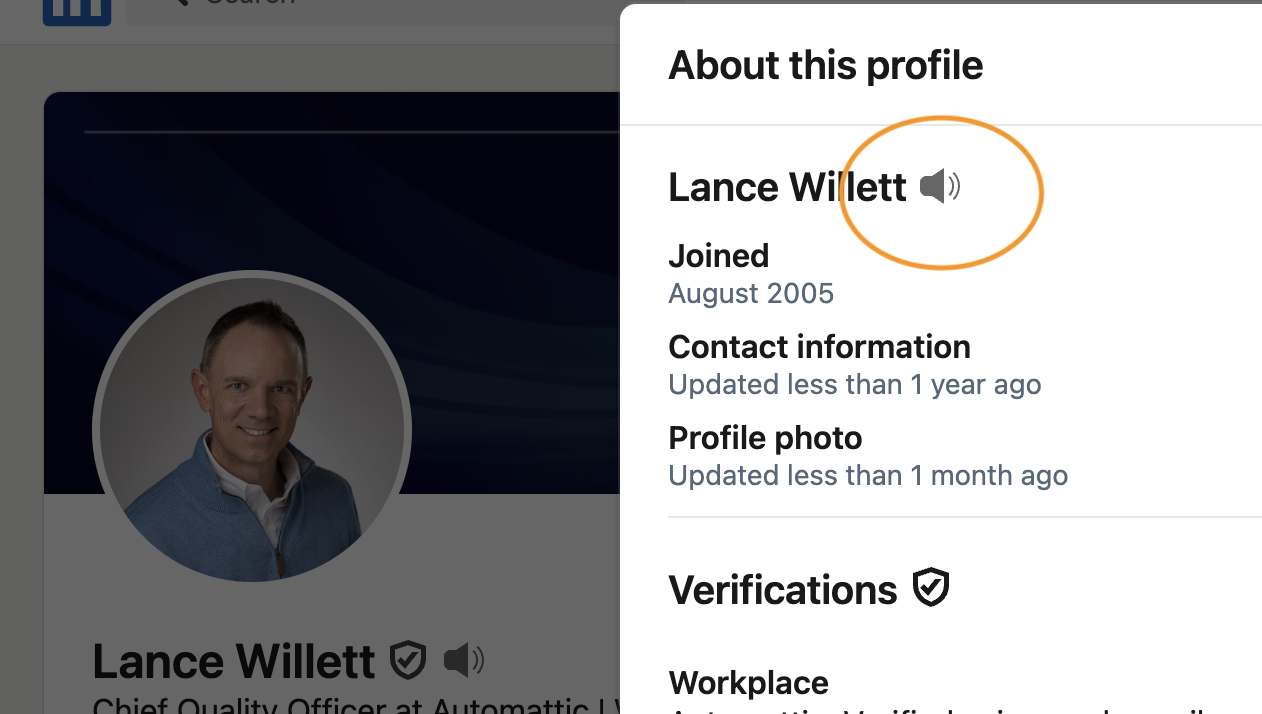
Use the available name pronunciation entry field appears in your personal profile settings. This is common in consumer or work apps like LinkedIn, Slack, Gravatar, and others.
- Type in a simple “sounds like” phrase with phonetic spelling and homonyms, words that rhyme easily with yours. And, if offered, add a quick audio recording.
- If the app doesn’t have a setting for name pronunciation, and you are extra friendly—you can add a visual aid to your first or last name field using brackets or quotes.
When you greet someone for the first time in a meeting—say your full name in your greeting. “Hi, I’m Lance Willett, based in Arizona, USA.” This acts as both a courtesy and a gift; a simple action to teach the other person how you’d prefer to be addressed.
Any other chance you get while talking or interacting, repeat your name again; slowly and clearly.
And, if you have any doubts, speak up when you guess there are language and cultural layers. This kindness helps spread clarity and reduce friction.
My current trick for new people I meet is to find a YouTube video or social media audio where they introduce themselves, so I can hear it before I greet them the first time.
If I can’t find a video with clear audio, I’ll often either Google the name to find common variations. Or, I’ll end up asking for the correct sounding name right at the start of the meeting.
What are your tips for proactive name pronunciation?


 The Full Stack Leader
Leave a reply to Elizabeth R Willett Cancel reply